In the Baltics, a survey on promoting cooperation in research projects with citizens’ participation continues. The second round of the survey is underway. The time for completing the questionnaires has been extended until the 5th of September.
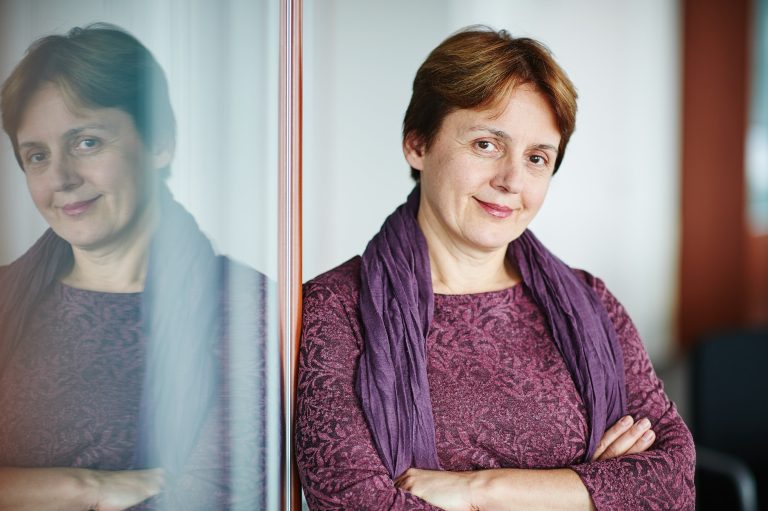
As part of the Erasmus+ project “University libraries strengthening the academia-society connection through citizen science in the Baltics” (LibOCS), Kaunas University of Technology Library continues its series of interviews with researchers and this time interviews Egle Butkeviciene, Professor of the Faculty of Social Sciences, Humanities and Arts at KTU, who is the head of the research group on citizen science. Text in Lithuanian is here.
The phenomenon of citizen science is still a new, unknown and too little attention-getting topic in Lithuania. A particularly strong contrast emerges when trying to compare this phenomenon with citizen science projects developed in Western Europe, which long ago crossed the boundaries of local interest and became the targets of national strategies. Scientists from Vytautas the Great University spoke about this and many other issues of citizen science in recently published interviews.
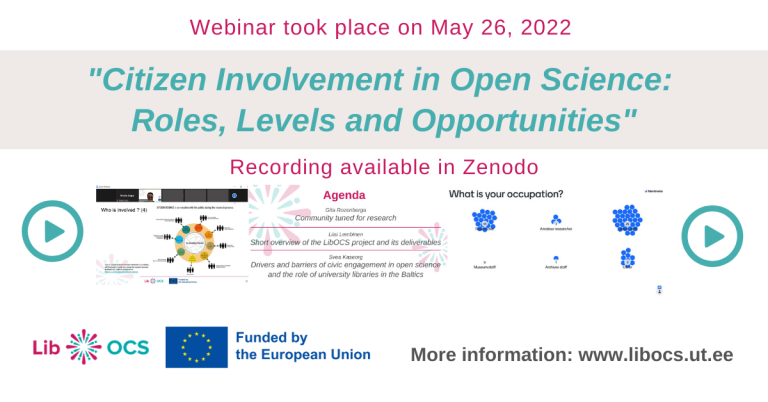
On May 26 this year, a webinar was held on cooperation in research and citizen participation in science-related activities and projects. All participants and interested parties have access to the presentations and the video recording of the webinar.
The webinar entitled “Citizen Involvement in Open Science: Roles, Levels and Opportunities” was organised by the LibOCS project team and held on May 26, 2022.
Within the framework of the project “University libraries strengthening the academia-society connection through citizen science in the Baltics” (abbreviated – LibOCS) it is planned to clarify such seemingly simple issues in the Baltic States. Currently, the survey “Collaboration for research: researchers, citizens, memory institutions specialists, and their roles” is being implemented in the Baltic States in the period until June 17.
Members of the public quite often voluntarily engage in the observation of various natural, social, and other phenomena, carry out data collection campaigns, and fill in formalized questionnaires prepared by scientists, who can carry out research and develop scientific discourse more effectively thanks to the help of the latter. Still the phenomenon of a citizen science as a close cooperation between citizens and professional scientists is only in its infancy in Lithuania.
Public engagement in the scientific activities is conventionally defined as the citizen science. It is a research activity based on cooperation that can produce excellent results. This cooperation can be very diverse. Ordinary citizens can collect and analyze data, participate in research publicity campaigns, etc. The results obtained by citizens are undoubtedly beneficial to researchers. Also, it is an opportunity for the citizens to realize themselves, to get acquainted with the scientific problems of a certain phenomenon.