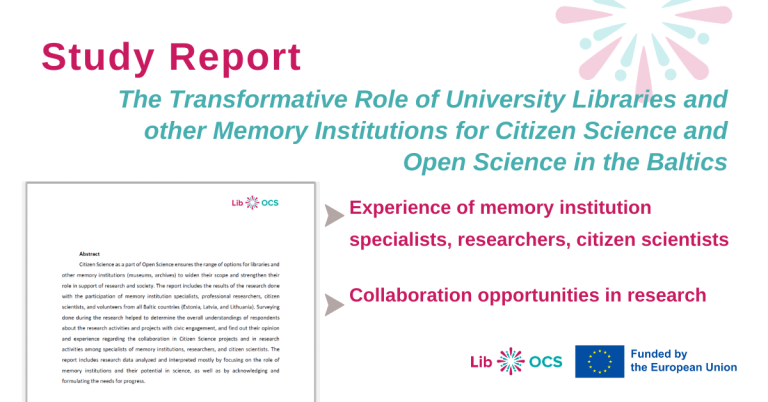
University libraries traditionally have calmer working conditions in the summer and everyone’s thoughts are in the mood of the approaching vacation. The exception was last summer, when the second stage of the study “The transformative role of academic libraries and memory institutions for citizen science and open science in the Baltic States” was launched at the beginning of the summer, which was carried out in the form of a survey by the participants of the “LibOCS” project.
This summer, the members of the Latvian Library Council started work on the development of a new “Library Industry Strategy 2023-2027” of the cultural state, which will be completed in December and submitted to the Minister of Culture of the Republic of Latvia for approval.
In the webinar “Academic library – an assistant in the scientific research process” organized by the Association of Latvian Academic Libraries (LATABA), which took place on October 20, 2022, the topic of the role of libraries in the involvement of citizens in research was also presented.
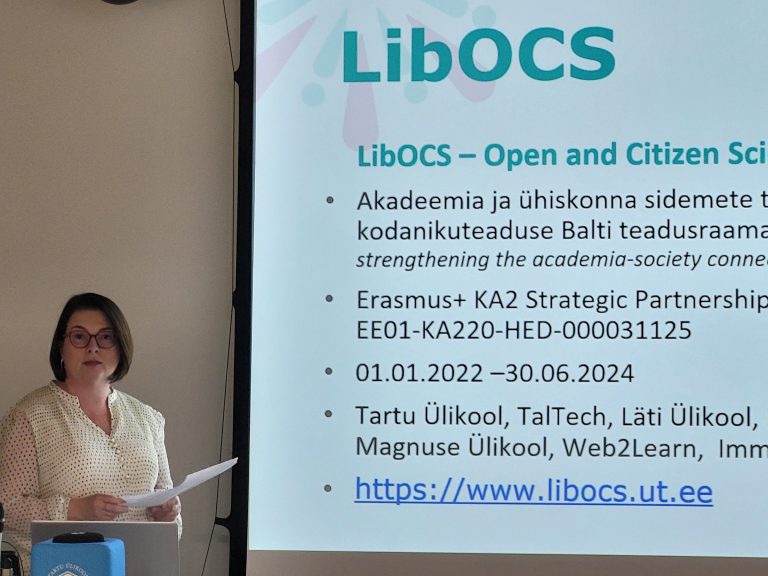
Lilian Neerut from the University of Tartu presented the LibOCS project at the annual „Academic and subject libraries day“ on the 27th of October. The day focused on various projects Estonian libraries are involved with.
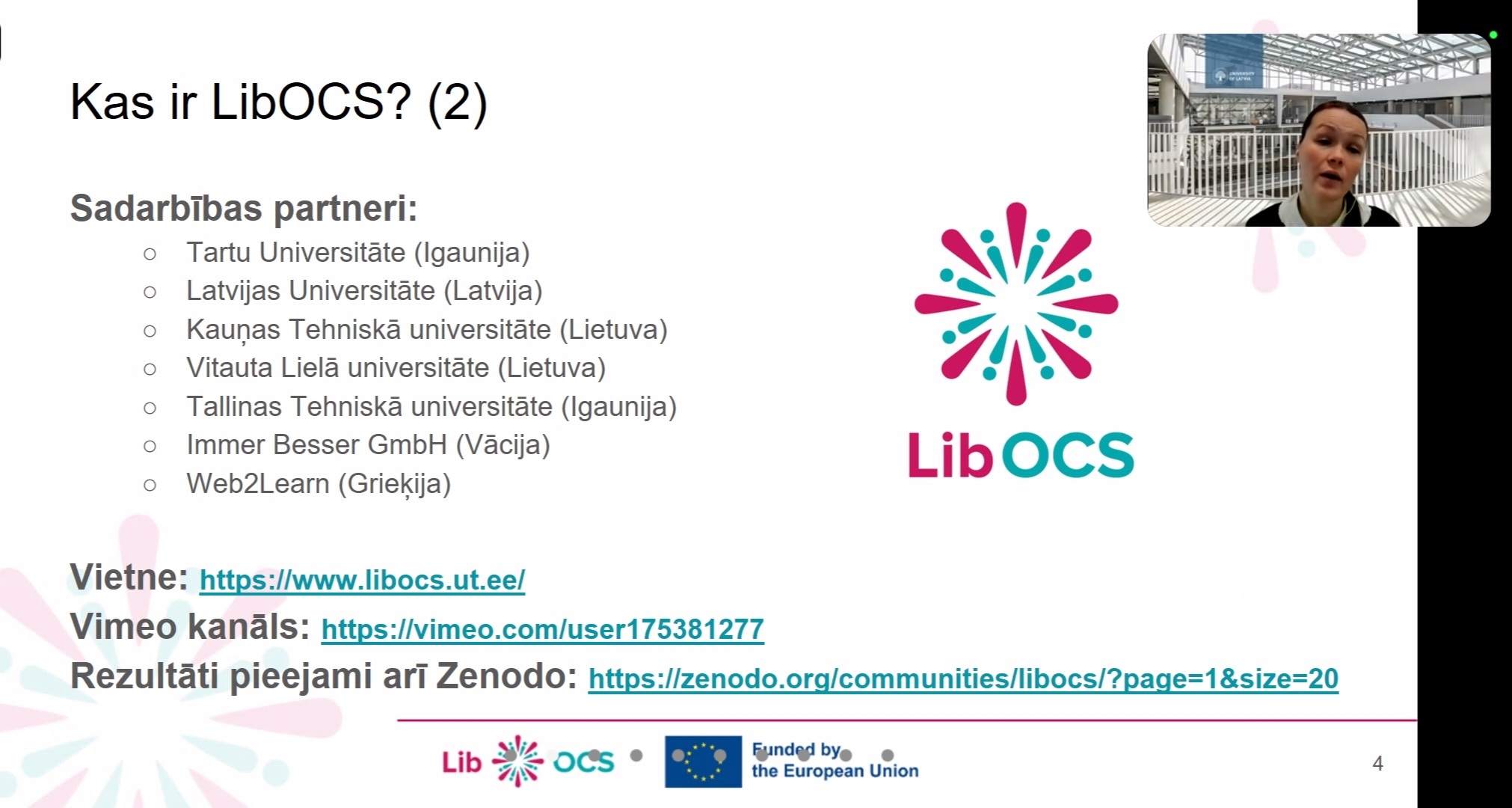
A webinar “Collaboration and participation perspectives for open research in the Baltics: researchers, citizens, librarians as partners” was organized by LibOCS team on October 25, 2022. It gathered more than 130 participants from The Baltic states – librarians, museum and archive specialists, researchers and other interesents in citizen science. They were introduced to goals of the LibOCS Project and future perspectives on the role of academic libraries in citizen science field.
This autumn, on October 18, the Scientific Library of Riga Technical University celebrated its 160th anniversary. In honor of this important anniversary, an international conference was held, of which consisted of two parts. The first part was devoted to the historical aspects of the library’s activity, while the speakers presented the achievements, projects and future plans of academic libraries in the second. This important anniversary of the library gathered a large number of conference listeners from Latvia and abroad in the beautiful library premises. The Latvian audience was mainly made up of academic library employees, but there were also guests from cooperating partner libraries in foreign coutries: Finland and Lithuania, and virtually Moldova.
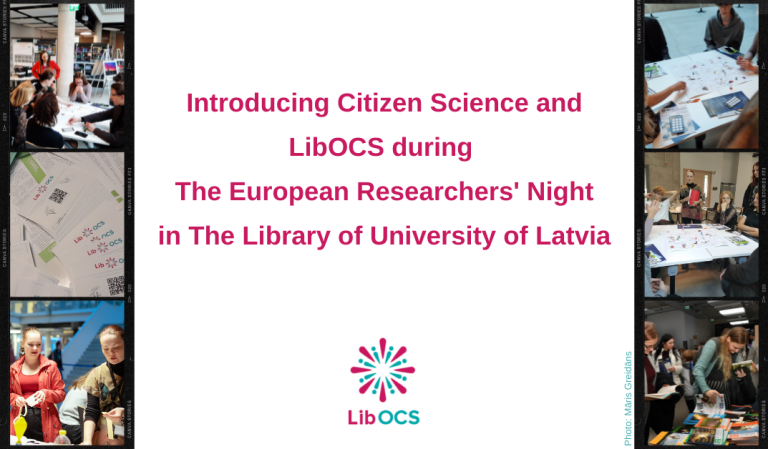
The European Researchers’ Night on September 30 was celebrated in the University of Latvia. Among many different events interesents were introduced to Citizen Science ideas and opportunities. In the library of the House of Science a board game “I want to research” was offered which lets participants act as scientists and play through the stages of research. During the game different aspects of science processes were discussed, for example, formulation of the idea, searching for information, cooperation with the society and other researchers. The participants were interested in Open Science and Citizen Science movements and shared their ideas about how to involve broader public in research activities. Chief librarian Gita Rozenberga introduced interesents to LibOCS project goals and encouraged everyone to participate in science related activities.

Between September 20th – 23rd, the University Library of Latvia hosted a week of Learning, Teaching, and Training Activities (LTTA) for the Baltic higher education institutes on open and citizen science capabilities. The meeting served to upskill staff for the next project activities ahead, but also addressed transversal tasks such as project management, dissemination, quality assurance and sustainability.
The webinar “Collaboration and participation perspectives for open research in the Baltics: researchers, citizens, librarians as partners” will bring together professional and amateur researchers, teaching staff, volunteers, librarians, and other memory institution professionals, as well as other interested parties, to explore and discuss how to empower scientists and the community to resolve ecologic, social and other problems.
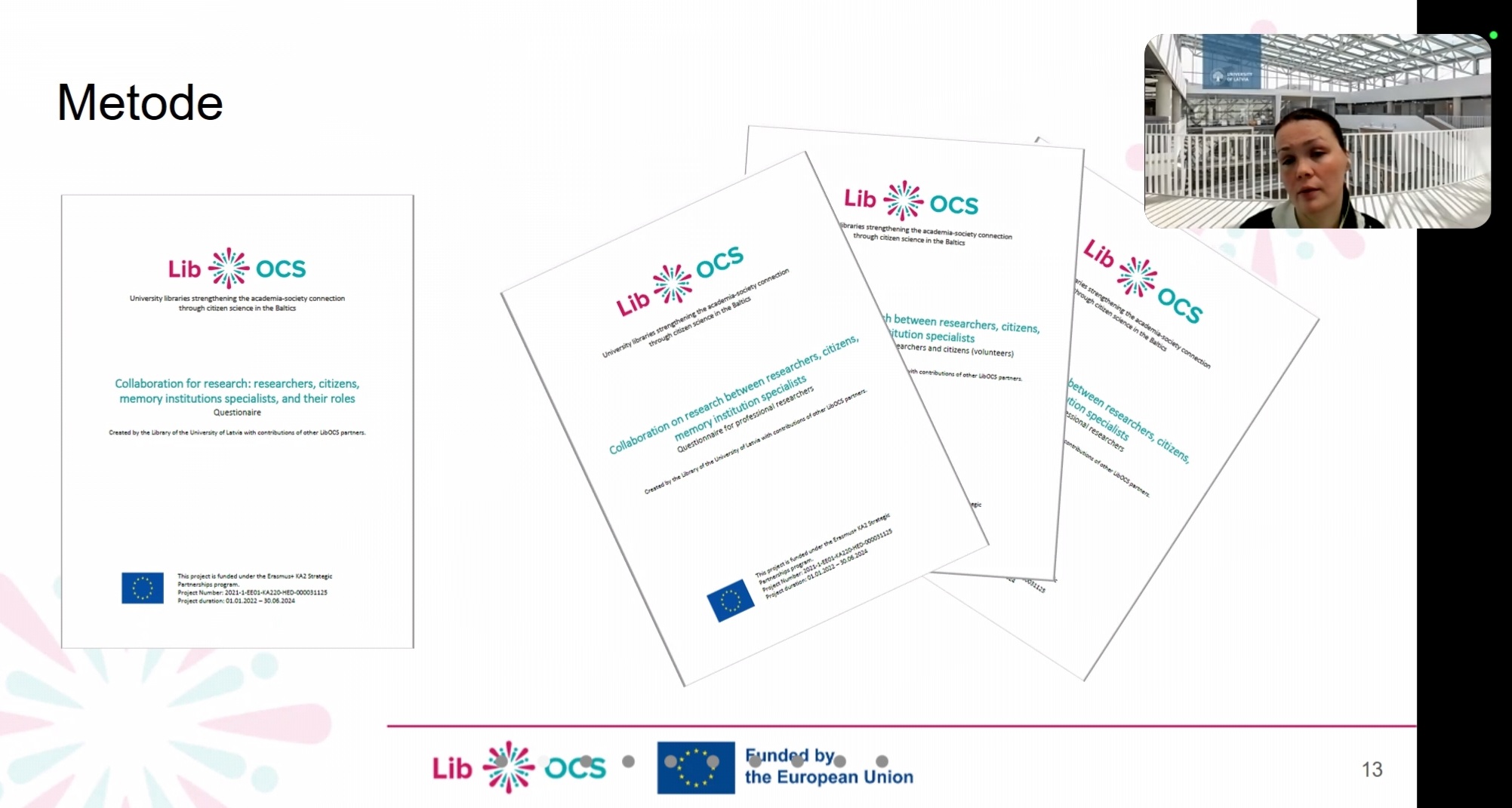
The second phase of the LibOCS project consisted of a two-part survey. In the first part and the questionnaire, more general information and feedback from the respondents about the cooperation between researchers, specialists of libraries and other memory institutions, and amateur researchers were clarified.