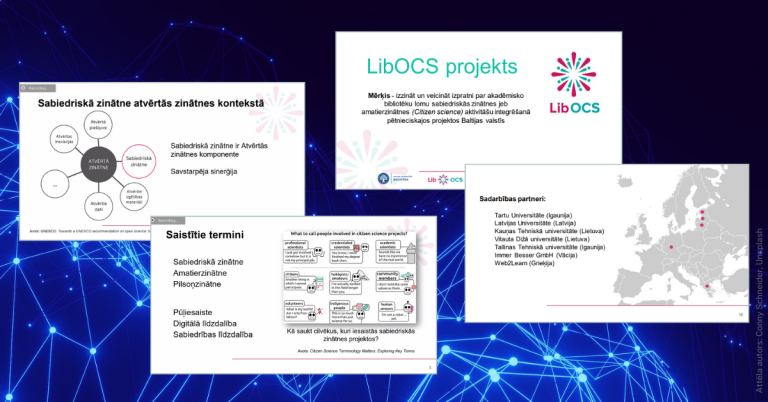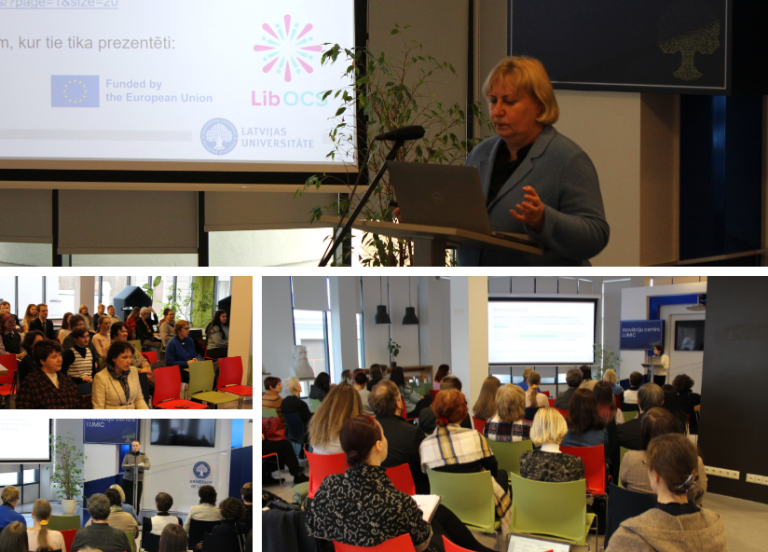
On March 8, 2024, the 82nd International Scientific Conference of the University of Latvia – Library Science and Information section was held at the Library of the University of Latvia. During the conference, researchers, experts and students covered and discussed a variety of topics relevant in the library and information field, among them – citizen science and LibOCS project results.
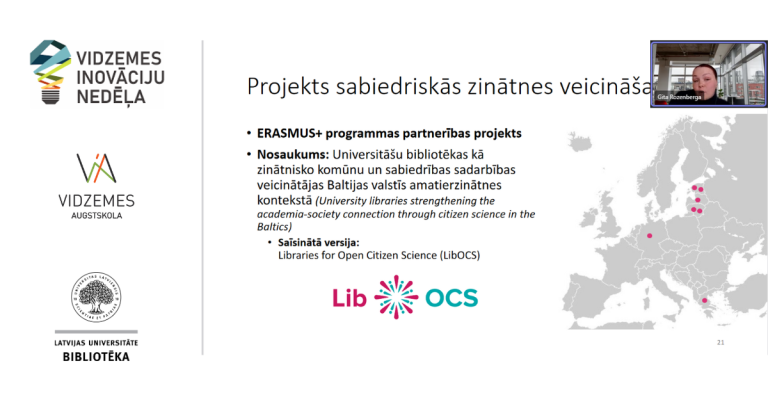
In Latvia from February 26th to March 1st people were encouraged to recognize the potential of innovations in Vidzeme Innovation Week. During this week, in several locations across the region, various events were organized, including the seminar “Open Science and Innovation Interaction”. In this seminar, participants learned more about citizen science initiatives as well as the LibOCS project and its activities, such as, research about citizen science potential in Latvia and upcoming webinars and results – reports, e-course, and others.
During the Open Access Week, on October 24 in 2023, University of Latvia Library staff and members of the LibOCS project gathered more than 80 participants in the webinar “Citizen science: interaction between researchers and the public in the research process”. Attendees had the opportunity to learn what citizen science is, why it is needed, and see examples of citizen science projects, as well as learn more about the LibOCS project.
Curious about Citizen Science and how could this approach be effectively supported by your organisation? Recently, Citizen Science raised a lot of interest and equally, a lot of questions. Where could it be applied? Is it worth it? What skills and resources are needed? Is my institution doing Citizen Science already?
In 2016, LERU recommended universities establish a single point of contact for citizen science. We took that recommendation and turned it into a prototype which was published in 2020. It is called BESPOC (Broad Engagement in Science, Point of Contact) Since then, we developed the prototype into a model which offers a solution for central support services for citizen science.
The LibOCS Project involves 6 LIBER member institutions (Tartu University (project leader), University of Latvia, Vytautas Magnus University, Kaunas University of Technology, TalTech Tallin, and SKS Knowledge Services). One distinct characteristic of LibOCS is the implementation of the BESPOC prototype as a model for central services for citizen science at the involved universities.
Registration for participation in the webinar is now open. You are invited to register (free) and participate in this webinar. The registration link is here.
Please save the date in your calendar: Date: April 11th (Thursday) at 14:30 CET (13:30 UK, 15:30 EET) Presenters: representatives from the aforementioned institutions. Generous time for questions, answers and dialogue.
On the 26th of October, colleagues from the Library of the University of Latvia and other departments of the University of Latvia met with representatives of Immer Besser (IB) to discuss opportunities for the development of Citizen Science at the University of Latvia using the BESPOC model.
BESPOC, or Broad Engagement in Science, Point of Contact, is a model that, taking into account various aspects, helps to develop support services or a single point of contact that promotes citizen science and open science in research institutions. This meeting and ongoing discussion about Citizen science among different department representatives initiated an exchange of ideas and knowledge about recent public engagement in research activities in Latvia and helped to recognize various perspectives, priorities and challenges that lie ahead in order to develop Citizen science services at the University of Latvia. While there remains a significant amount of work left to do, the outlook for the future is optimistic.
The international conference European Conference on Information Literacy – ECIL2023 is being held for the ninth time, and this time in Krakow (Poland). The conference gathered more than 150 participants not only from Europe but also from all over the world.
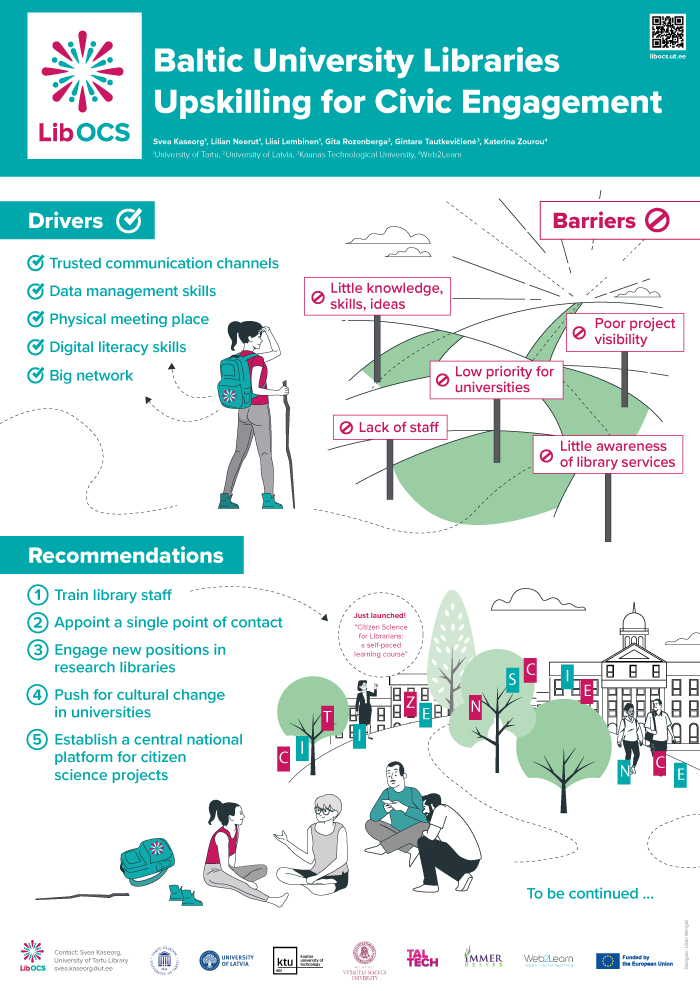
LIBOCS project poster was presented over the summer in two various events: the 52nd LIBER annual Conference, where Svea Kaseorg and Lilian Neerut presented our findings during the poster session. The poster can be found from Zenodo. The poster found a lot of positive feedback and was one of the favorite posters according to LIBER participants.
The same poster was presented during the EODOPEN project partners’ meeting in Budapest during a workshop on how to develop an community involvement project into a citizen science project.
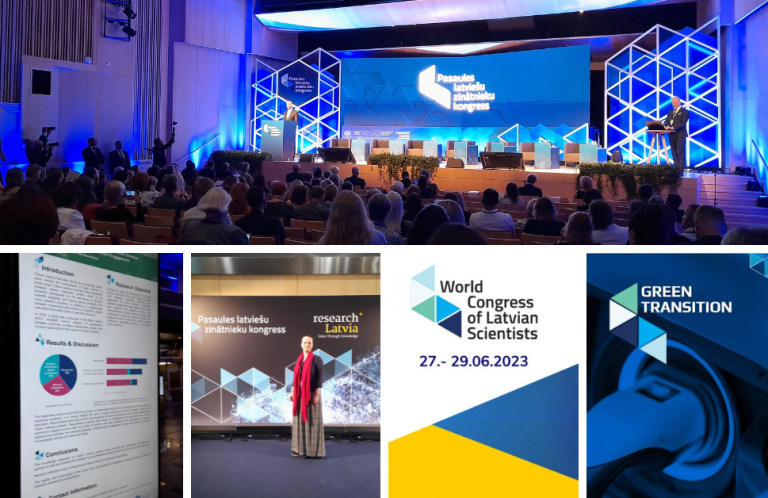
This summer, from June 27 to June 29, 2023, an important scientific event took place in Riga for the fifth time – the 5th World Congress of Latvian Scientists “Research Latvia”. In the sunny days of June, scientists from Latvia and the diaspora, young scientists, international and local cooperation partners, representatives of the government, state administration and foreign representative offices – gathered to honor the achievements of Latvian science and discuss the impact of scientific results both in society and in policy making.
„Citizen Science for Librarians: Self Paced Learning Course“ is a free, open access, self-paced learning course for librarians and anyone interested in citizen science, organising and facilitating citizen science projects. The course consists of 5 modules that you can study anytime, anywhere. If you want to not only develop your skills and knowledge but also receive a certificate confirming them, you are welcome to create a free personal account and complete course assignments.