Members of the public quite often voluntarily engage in the observation of various natural, social, and other phenomena, carry out data collection campaigns, and fill in formalized questionnaires prepared by scientists, who can carry out research and develop scientific discourse more effectively thanks to the help of the latter. Still the phenomenon of a citizen science as a close cooperation between citizens and professional scientists is only in its infancy in Lithuania.
Public engagement in the scientific activities is conventionally defined as the citizen science. It is a research activity based on cooperation that can produce excellent results. This cooperation can be very diverse. Ordinary citizens can collect and analyze data, participate in research publicity campaigns, etc. The results obtained by citizens are undoubtedly beneficial to researchers. Also, it is an opportunity for the citizens to realize themselves, to get acquainted with the scientific problems of a certain phenomenon.
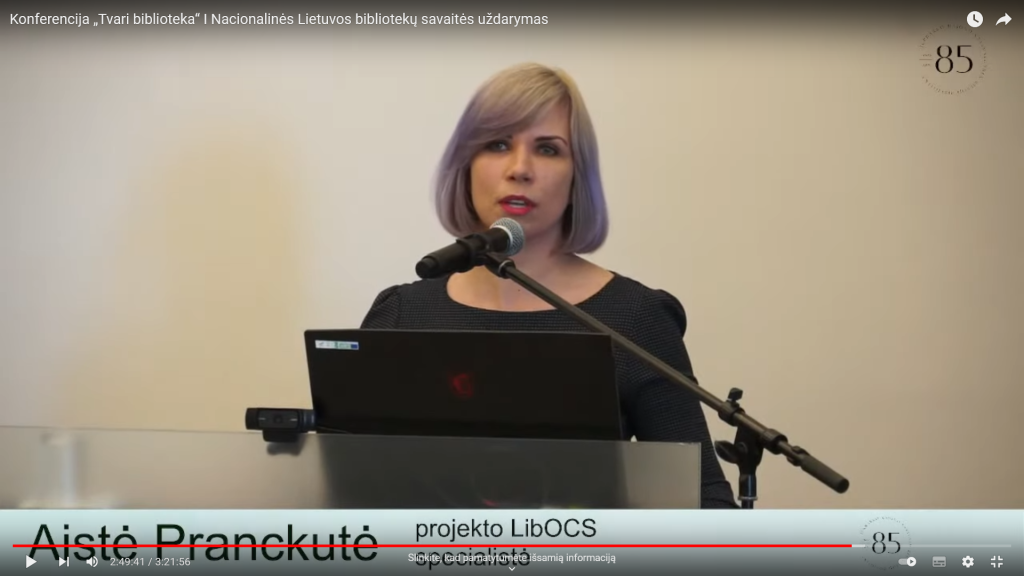
KTU Library specialists Aistė Pranckutė and Daiva Steponavičienė took part in the conference “Sustainable Library“. It was organised by the Lithuanian Librarians Association and was held in Jurbarkas Public Library on 29th of April, 2022.
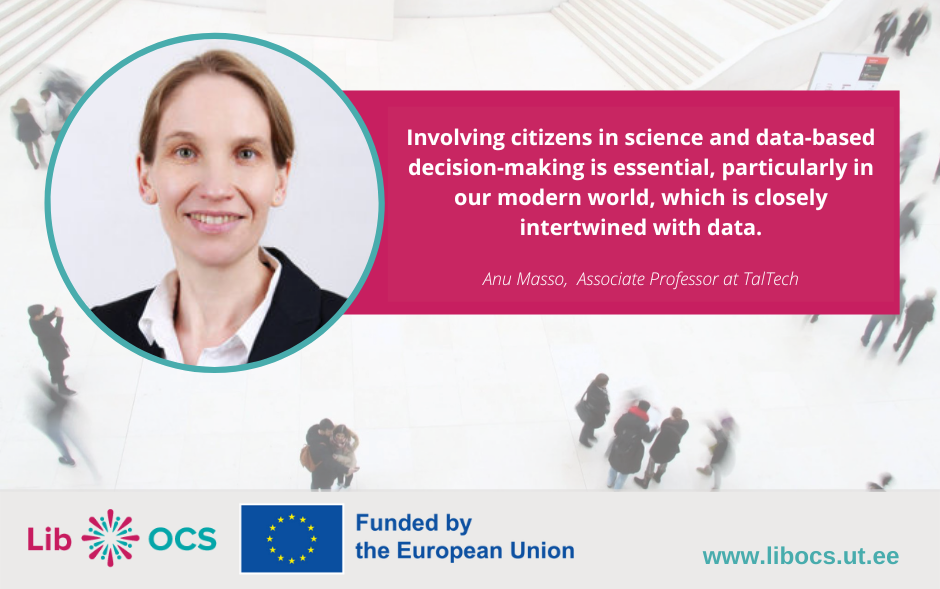
Citizen science at its core involves researchers as well as citizens. “It is a type of science that has been created through the active participation of citizens or solely under the guise of citizens,” said Anu Masso, an associate professor at Tallinn University of Technology. She shared that involving citizens in science and data-based decision-making is essential, particularly in our modern world, which is closely intertwined with data.